Cabin Air Guide
Negative Ion Air Purifier for Cars Explained
A plain-language explanation of negative-ion technology, how compact car air purifiers use it, and what realistic expectations look like for a small cabin.
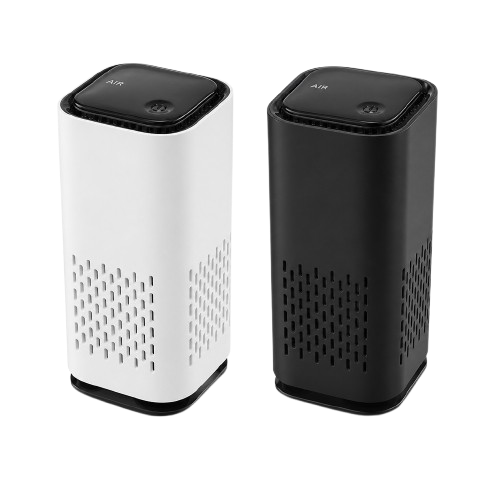
"Negative ion" is one of those terms that shows up on a lot of car air purifier listings, but it is rarely explained clearly. Some marketing around it leans into vague or exaggerated health claims, which makes it harder for shoppers to understand what the technology actually does. This guide breaks negative-ion technology down in plain language — what negative ions are, how compact purifiers generate them, what a reasonable set of expectations looks like, and how this technology is used in a product like the PureCabin™ FreshDrive.
None of the information below should be read as medical advice or a health claim. This is a general, practical explanation of the technology and how it is commonly used in small personal-space air purifiers.
What is a negative ion, exactly?
An ion is simply an atom or molecule that carries an electrical charge because it has gained or lost an electron. A negative ion has gained an extra electron, giving it a negative charge. These charged particles occur naturally in the environment — near waterfalls, after a thunderstorm, and at the ocean, for example, are commonly cited as places where negative ion concentration in the air is higher than average.
A negative-ion generator, sometimes called an ionizer, creates these charged particles artificially and releases them into the surrounding air. This is the basic mechanism behind negative-ion air purifiers, including compact, USB-powered units designed for cars and small personal spaces.
How does a negative-ion generator work inside a small purifier?
Inside a compact unit like FreshDrive, a small internal component generates a stream of negative ions and releases them into the air around the device. This happens continuously while the unit is powered on, working alongside a composite filter that physically captures larger particulates as air passes through the unit. The combination — ion release plus physical filtration — is the basic design approach behind most compact negative-ion car purifiers on the market today.
Because the unit is compact and USB-powered, it is designed for a car cabin or a small personal space (up to roughly 10m², or about 100 square feet) rather than a whole house or large open room. This matters when comparing air volume specs (FreshDrive is rated at 50m³/h) against the actual size of the space you intend to use it in.
What negative ions are commonly associated with
Negative ions are widely discussed in relation to airborne particulates — the idea being that charged ions can attach to floating dust and particles, causing them to clump together and settle out of the air more quickly rather than remaining suspended. This is the general principle behind why negative-ion technology is often paired with air purification products.
It is important to be measured here: this article is not making a specific health or medical claim. We are describing the general mechanism commonly associated with negative-ion technology in consumer air purifier products, not asserting a guaranteed health outcome. If you have specific health concerns related to air quality, consult a medical professional rather than relying on any consumer air purifier product.
Negative ions vs. traditional filtration: how they differ
Traditional (mechanical) filtration
A physical filter — like the composite filter inside FreshDrive, or your vehicle's cabin air filter — works by trapping particles as air physically passes through its material. It is a passive, mechanical process: air flows through, particles get caught, clean air continues onward.
Negative-ion technology
Ion generation is an active process that releases charged particles into the surrounding air rather than requiring air to pass through a physical barrier. This is why negative-ion technology is often described as working throughout the room or cabin rather than only at the point where air enters a filter housing.
Why many purifiers use both
Combining mechanical filtration with ion generation is a common design choice because the two approaches address air quality from different angles — one physically captures particulates passing through the unit, the other works more broadly in the surrounding air. FreshDrive uses this combined approach rather than relying on ion technology alone.
Common questions and misconceptions
Do negative-ion purifiers produce ozone?
Some ionizing technologies can produce ozone as a byproduct, which is a consideration worth understanding when shopping for any ionizing air device. Reputable consumer products are designed to minimize or avoid meaningful ozone output. If ozone output is a concern for you, review the manufacturer's specifications and safety information before purchasing any ionizing air product.
Is a negative-ion purifier the same as an air freshener?
No. An air freshener adds fragrance to mask smells but does nothing to the underlying particles or air composition. A negative-ion purifier is a different mechanism entirely, working on airborne particles rather than covering odors with fragrance.
Will it cure allergies, asthma, or illness?
No consumer air purifier — negative-ion or otherwise — should be marketed or understood as a cure or treatment for any medical condition. If you have allergies, asthma, or another respiratory condition, speak with a medical professional about appropriate care. A compact purifier can be one part of a general comfort routine, but it is not a substitute for medical guidance.
Does a stronger ion output mean better performance?
Not necessarily, and this is an area where marketing claims can outpace substance. Focus on practical, verifiable specs — noise level, air volume relative to your space size, filter type, and build quality — rather than unverifiable claims about ion concentration or output strength.
A brief history of ion-based air technology
Ionizing air technology has roots going back to research in the early-to-mid twentieth century on how charged particles behave in the atmosphere, and it entered consumer products decades ago in the form of larger household air purifiers and ionizing fans. Over time, the electronics required to generate a steady stream of negative ions became smaller, more efficient, and cheaper to produce, which is what eventually made it practical to fit this technology into a compact, USB-powered unit small enough for a car cup holder. This miniaturization trend — not a change in the underlying science — is largely why negative-ion technology has become common in affordable portable purifiers over the past several years.
How to evaluate negative-ion product claims
Because negative-ion technology is easy to describe in vague, impressive-sounding terms, it is worth applying a critical eye to any specific product claim. A few questions can help separate solid products from overhyped ones:
- Does the listing describe a specific mechanism (ion generation plus a named filter type) or only vague marketing language?
- Are health claims specific and medical in nature (a red flag) or general and comfort-oriented (more reasonable)?
- Is there a stated air volume (m³/h) and recommended space size, or just an unqualified claim of "powerful purification"?
- Does the seller provide accessible support resources — an FAQ, shipping and refund policies, and a way to ask questions before or after purchase?
A product that scores well on these practical questions is more likely to be a reasonably designed accessory, regardless of how exciting or understated its marketing language happens to be.
Negative ions and static electricity: an interesting side effect
Some users notice a subtle reduction in static electricity buildup in spaces where an ionizer is running, since negative ions can neutralize some of the static charge that accumulates on surfaces and in the air, particularly in dry conditions. This is a minor, secondary effect rather than a primary selling point, but it is a commonly reported observation associated with ionizing technology in general, separate from any air-freshening function.
Setting realistic expectations for a car cabin
A car cabin is a small, frequently ventilated space — doors open and close, windows go up and down, and the HVAC system regularly introduces new air. This means a compact negative-ion purifier is working in a dynamic environment rather than a sealed room. Realistic expectations should center on supporting a fresher-feeling cabin as part of a broader routine that includes regular cleaning, cabin filter maintenance, and prompt odor-source removal — not as a stand-alone fix for every air quality concern.
For a broader look at how a purifier fits alongside your vehicle's built-in systems, see our comparison of car air purifiers vs. cabin air filters.
How FreshDrive applies negative-ion technology
PureCabin™ FreshDrive pairs negative-ion generation with a composite filter in a compact ABS housing, powered by USB and controlled with a single touch. It operates below 36dB, quiet enough to run during calls, music, or podcasts, and is rated for 50m³/h of air volume — appropriately sized for a car cabin or small personal space rather than a large room. It is available in four variants — White, Black, White Pro, and Black Pro — for $24.99 USD with free shipping.
Negative ions compared to other purification approaches
Beyond simple mechanical filters, a few other technologies show up in the air purifier market, and it is useful to know how negative-ion generation compares. HEPA filtration relies entirely on physically trapping particles as air passes through a dense filter medium — highly effective for particulates, but it does nothing on its own for air that does not pass through the unit. UV-C purification uses light to target airborne microorganisms but adds cost, complexity, and typically a larger housing, which is part of why it is less common in compact, USB-powered car accessories. Negative-ion generation sits in a middle ground: simpler and smaller than UV-C systems, while working somewhat more broadly in the surrounding air than a filter-only design, which is why it pairs well with a composite filter in a compact form factor like FreshDrive.
Practical tips for using a negative-ion purifier in your car
- Place the unit on a stable, secure surface with its air openings unobstructed.
- Keep the USB cable routed away from pedals and controls.
- Run it consistently during regular drives rather than only occasionally, since consistent operation supports a more stable cabin environment.
- Combine it with regular cleaning and cabin filter maintenance rather than relying on it as your only cabin-air step.
- Follow the manufacturer's instructions for filter care and cleaning the housing periodically.
Frequently asked questions
How long does it take to notice a difference?
This varies by vehicle, ventilation habits, and existing odor sources. Many users run their purifier continuously during daily drives as part of an ongoing routine rather than expecting an immediate, dramatic change from a single use.
Can I use a negative-ion purifier outside my car?
Yes. Because FreshDrive is USB-powered and compact, it can be used at a desk, in a small bedroom, or in any personal space up to roughly 10m² (about 100 square feet), not just inside a vehicle.
Is negative-ion technology new?
No — ionizing air technology has been used in consumer air purifiers for decades. What has changed more recently is the miniaturization that allows it to fit into small, USB-powered, portable devices suitable for a car cup holder.
Learn more or get started
Review full specifications and common questions on our FAQ page, check our shipping policy and refund policy before ordering, and browse additional cabin-air guides on the PureCabin blog. If you have specific questions about negative-ion technology or your use case, reach out through our contact page.
This article provides general educational information about negative-ion technology as used in consumer air purifiers. It is not medical advice, and no claims in this article should be interpreted as a promise of a specific health outcome or medical benefit.
PureCabin FreshDrive
Fresher cabin air from $24.99
USB-powered · Quiet under 36dB · Free shipping · Secure Stripe checkout