Cabin Air Guide
Car Air Purifier vs Cabin Air Filter: What's the Difference?
Learn how portable car air purifiers and built-in cabin air filters work differently, why you likely need both, and how to build a complete cabin-air routine.
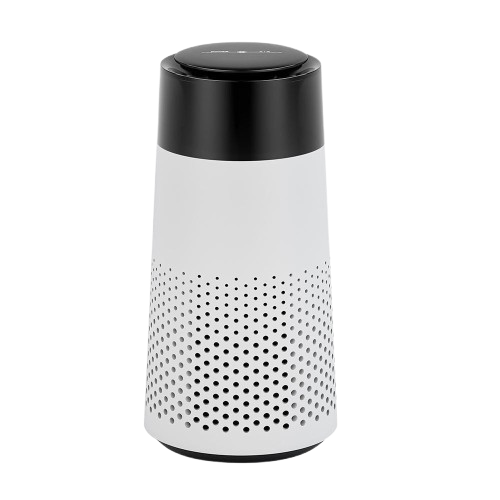
"Do I need a car air purifier if I already have a cabin air filter?" is one of the most common questions drivers ask once they start paying closer attention to the air quality inside their vehicle. The short answer is that these two things do related but different jobs, and understanding how each one works makes it much easier to decide what your car actually needs — and what a purifier realistically can and cannot do.
In this guide, we'll break down what a cabin air filter does, what a portable purifier like the PureCabin™ FreshDrive does, where their jobs overlap, and how to combine both into a simple, effective cabin-air routine.
What is a cabin air filter?
Your vehicle's cabin air filter is a built-in component, typically located behind the glovebox or under the hood near the base of the windshield, depending on the make and model. It filters outside air before it enters the cabin through your vents, whether you are running the heater, AC, or simply fresh-air ventilation. Most cabin filters are made of pleated paper or a synthetic material designed to capture dust, pollen, road debris, and other particulates before they reach you and your passengers.
Cabin filters are passive — they only filter air as it passes through the HVAC system on its way into the car. They do nothing for air that is already inside the cabin recirculating without passing through the vents, and they do not address odors that originate inside the car itself, such as smoke residue embedded in upholstery or food smells from a spill.
Signs your cabin air filter needs attention
- Noticeably weaker airflow from the vents
- A musty or stale smell when the fan first turns on
- Visible dust or discoloration when you inspect the filter
- Increased allergy-like symptoms while driving with windows up
Most manufacturers recommend replacing the cabin air filter roughly every 12,000 to 15,000 miles, though this can vary based on driving conditions — dusty roads, heavy traffic, or frequent smoking in the vehicle can shorten that interval. Check your owner's manual for the manufacturer's specific recommendation.
What is a portable car air purifier?
A portable car air purifier, such as FreshDrive, is a standalone accessory you place inside the cabin — typically in a cup holder or on the console — rather than a component built into your vehicle's HVAC system. Instead of filtering air as it enters the cabin, it works on the air that is already circulating inside the car, continuously as long as it is powered on.
FreshDrive combines a composite filter with negative-ion technology and USB power, running quietly (under 36dB) so it can stay on during normal driving. Because it operates independently of your vehicle's HVAC system, it can also be unplugged and used elsewhere — a desk, a small bedroom, or any personal space up to roughly 10m² (about 100 square feet).
Key differences at a glance
Where they work
A cabin air filter treats air entering from outside; a portable purifier treats air already inside the cabin, including air that never passes through the HVAC intake at all — for example, odors released from upholstery or trapped in the footwell.
Installation
A cabin filter is installed inside the vehicle's HVAC housing and requires basic mechanical access to replace. A portable purifier requires no installation — simply place it and connect USB power.
What they filter
Cabin filters are effective against dust, pollen, and larger airborne particulates entering from outside. Portable purifiers using negative-ion technology and composite filters are designed to support fresher air and help with lingering odors already inside the cabin, though neither should be marketed or understood as a medical or health treatment device.
Portability
A cabin filter stays with the vehicle. A portable purifier like FreshDrive can move between your car, a desk, or a bedroom depending on where you need it that day.
Maintenance
Cabin filters need periodic replacement (typically every 12,000–15,000 miles). Portable purifiers require occasional cleaning of the housing and following the manufacturer's filter maintenance schedule.
Cost comparison over time
Cabin air filters typically range from around $10 to $30 depending on the vehicle, plus labor if you have it installed rather than replacing it yourself, and are needed every 12,000 to 15,000 miles. Over the life of a vehicle, this adds up to a modest recurring cost that most drivers already budget for as part of routine maintenance.
A portable purifier is typically a one-time purchase with occasional filter maintenance. At $24.99 USD with free shipping, FreshDrive represents a low upfront cost relative to the ongoing value it can provide across daily commutes, especially since it can also be used outside the vehicle. Comparing the two side by side, neither is a substitute for the other from a cost perspective — they are simply two separate, complementary line items in an overall cabin-care budget.
How manufacturers design around these two systems
It is worth understanding that vehicle manufacturers design cabin air filtration as a core part of the HVAC system, engineered specifically for that vehicle's airflow, ductwork, and blower capacity. Portable purifier manufacturers, on the other hand, design their products to work independently of any specific vehicle, which is why the same unit can move between a sedan, an SUV, a desk, or a bedroom without any compatibility concerns. This difference in design philosophy is part of why the two products are not interchangeable: one is built into your vehicle's specific engineering, and the other is a general-purpose accessory for enclosed personal spaces.
Common misconceptions worth clearing up
- "My car has AC, so I don't need a cabin filter." Air conditioning and cabin filtration are separate systems working together — AC controls temperature, while the cabin filter controls what particulates enter with that conditioned air.
- "A purifier replaces the need for a cabin filter." A portable purifier does not filter air entering from outside the vehicle, so skipping cabin filter maintenance in favor of a purifier leaves a gap in your overall air quality routine.
- "If my car doesn't smell bad, I don't need either one." Cabin filters affect airflow and particulate load even when no odor is present, and skipping replacement can gradually reduce HVAC performance over time.
Do you need both?
For most drivers, yes — the two serve complementary roles rather than competing ones. A well-maintained cabin filter reduces the amount of dust and pollen entering your car in the first place, which reduces the overall particulate load your purifier has to work against. Meanwhile, a portable purifier helps address air quality and lingering odors that a cabin filter was never designed to touch, since it only filters incoming air rather than continuously treating cabin air.
Think of it as two layers of a routine: the cabin filter is your first line of defense against what comes in from outside, and a purifier like FreshDrive is an ongoing layer for the air already inside your personal space.
A scenario-based comparison
Scenario 1: Seasonal allergies and pollen
A clean, properly functioning cabin filter is your primary defense here, since pollen mostly enters from outside air. A purifier can provide a supporting layer, but replacing an old, clogged cabin filter is usually the higher-impact first step.
Scenario 2: Lingering smoke or food odor
This is where a portable purifier tends to add the most value, since the odor source is inside the cabin itself rather than something entering from outside air. Combine a purifier with thorough cleaning — see our guide on removing smoke smell from your car for a full step-by-step approach.
Scenario 3: Rideshare or frequent passenger use
Both matter here. Frequent passengers bring in outside particulates (making a fresh cabin filter valuable) while also potentially leaving behind odors between trips (making a portable purifier useful for maintaining a consistently fresher-smelling cabin for the next passenger).
Scenario 4: New car with a factory-fresh cabin filter
Even a brand-new vehicle benefits from a portable purifier if you want ongoing freshness beyond what the factory filter alone provides, since the built-in filter still only addresses incoming air rather than odors that develop from daily use, spills, or passengers over time.
What neither one will fix on its own
It is worth being direct about limitations. Neither a cabin filter nor a portable purifier will resolve a moisture leak causing mold, a mechanical issue causing burning smells, or deeply embedded stains and residue in upholstery. Persistent unusual smells — especially anything resembling burning, gas, or mildew — should be inspected by a qualified mechanic rather than addressed with filtration alone.
Building a combined routine
- Check and replace your cabin air filter on your manufacturer's recommended schedule.
- Vacuum and clean the interior on a regular basis.
- Run a portable purifier such as FreshDrive during regular drives for ongoing freshness.
- Address any spills, odors, or moisture issues at the source as soon as they happen.
- Periodically ventilate the cabin with fresh-air mode rather than relying solely on recirculation.
A quick reference: which one to prioritize first
If you are starting from scratch and can only address one thing today, check your cabin air filter first. It is inexpensive, has a clear replacement schedule, and directly affects both air quality and HVAC performance. Once that is handled, a portable purifier is a reasonable next addition for ongoing freshness, particularly if you deal with odors, frequent passengers, pets, or simply want a fresher-feeling cabin during long commutes.
Frequently asked questions
Can a portable purifier replace my cabin air filter?
No. They serve different functions — a portable purifier does not filter incoming outside air the way your vehicle's built-in cabin filter does. Both should be maintained independently.
Will a clean cabin filter make my purifier work better?
Indirectly, yes. A clean cabin filter reduces the amount of dust and particulates entering the cabin in the first place, which means your purifier has less incoming load to manage and can focus on maintaining freshness in the air already inside.
How do I know which one is causing a smell in my car?
If the smell appears specifically when the fan first turns on and fades shortly after, it may be linked to the cabin filter or HVAC system. If the smell persists regardless of whether the fan is on, it is more likely coming from inside the cabin — upholstery, carpet, or trapped debris — which a cleaning routine and purifier are better suited to address.
Choosing a portable purifier to pair with your cabin filter
If you have your cabin filter replacement on schedule and want an additional layer for daily freshness, FreshDrive offers USB power, quiet operation under 36dB, and negative-ion technology in a compact design available in four variants — White, Black, White Pro, and Black Pro — for $24.99 USD with free shipping. Read more in our FAQ, review our shipping policy and refund policy, or explore additional guides on the PureCabin blog. Questions about your specific setup can be sent through our contact page.
This article provides general product and maintenance information. It is not medical advice. Persistent unusual odors, especially burning or mildew smells, should be evaluated by a qualified mechanic rather than addressed with filtration or purification alone.
PureCabin FreshDrive
Fresher cabin air from $24.99
USB-powered · Quiet under 36dB · Free shipping · Secure Stripe checkout