Seasonal Cabin Care
Winter Car Cabin Stale Air: Causes and Solutions
Why car cabins feel stuffy in winter and practical, non-medical solutions for fresher air when windows stay closed and heaters run all day.
Winter driving comes with a familiar trade-off. To stay warm, most drivers keep windows shut, run the heater on repeat, and recirculate the same cabin air for the length of a trip. That combination is convenient, but it also means fewer opportunities for outside air to replace what is already circulating inside the car. By the second or third cold-weather trip of the day, many drivers notice their cabin feels stuffier, heavier, or simply less fresh than it did in warmer months — even when the car looks clean.
This article walks through why winter cabins tend to feel more closed-in, the everyday habits and conditions that contribute to it, and a set of practical, non-medical steps you can add to your routine. We will also look at where a compact, USB-powered air purifier such as the PureCabin™ FreshDrive can fit into a winter cabin-care routine alongside cleaning, ventilation, and filter maintenance.
Why does winter make cabin air feel worse?
In spring and summer, many drivers crack a window at a stoplight, leave the sunroof open on a highway stretch, or park with a door open while loading groceries. Each of these small moments lets some cabin air exchange with the outside. In winter, most of that natural exchange disappears. Windows stay up to keep warm air in, doors open for the shortest possible time, and the climate control system is frequently set to recirculate mode to reach a comfortable temperature faster and reduce fuel or battery use.
Recirculation mode is genuinely useful for comfort and efficiency, but it works by pulling cabin air back through the system instead of drawing in fresh air from outside. Run for long enough, this can allow moisture, dust, and odor compounds already inside the car to build up rather than being diluted by outside air. None of this means your car is unsafe — it simply means the cabin behaves more like a small, mostly sealed room for several months of the year.
The main contributors to stale winter cabin air
Closed windows and constant recirculation
As described above, the biggest structural factor is simply less airflow. A cabin that rarely exchanges air with the outside will hold onto whatever is already inside it — including odors from food, damp clothing, or the previous weekend's takeout wrapper that never quite made it to the trash.
Damp gear, snow, and road salt
Boots, gloves, umbrellas, and jackets carry moisture and road salt into the cabin every time you get in the car. Wet floor mats can take hours to dry in cold weather, and that lingering dampness is one of the more common sources of a musty smell in winter. Road salt residue left on mats or carpet can also hold moisture longer than plain water would.
Heater dust and the first-run smell
If your car sits unused for a few days in cold weather, dust can settle inside the HVAC ductwork. The first time you turn the heater on, that dust is pushed into the cabin, which is why many drivers notice a brief dusty or slightly burnt smell when they start the heater for the first time on a cold morning. This typically fades after a minute or two but is a useful reminder to keep an eye on your cabin air filter.
Fewer cleaning sessions
Vacuuming the car, wiping down surfaces, and airing out the cabin are all things people naturally do less often when it is cold outside. Skipping a few weeks of routine cleaning in winter can allow dust, crumbs, and odor sources to accumulate more than they would in milder weather.
Temperature swings and off-gassing
Interior materials — plastics, vinyl, and adhesives — can release a very small amount of odor as they warm from a cold soak. This is normal for most vehicles and usually fades quickly once the cabin reaches a stable temperature, but it can add to that "stuffy car" feeling on the coldest mornings.
Signs your winter cabin could use more airflow
You do not need special equipment to notice when a cabin has gone too long without fresh air. Common signs include a musty or heavy smell that is noticeable as soon as you open the door, windows that fog up faster than usual, a persistent damp-carpet smell after a snowy commute, or simply feeling like the air inside is "thicker" than outside air on a short drive. None of these are medical symptoms — they are everyday comfort cues that usually respond well to ventilation, cleaning, and filter maintenance.
Practical solutions for fresher winter cabin air
1. Ventilate in short, smart bursts
You do not need to drive with a window down in freezing weather to get some benefit from ventilation. A brief burst of outside air — for example, cracking a window for thirty seconds at a stoplight, switching out of recirculation mode for a few minutes on the highway, or opening both front doors for a moment while the car is parked in a garage — can help exchange some of the air inside the cabin without losing much heat.
2. Manage moisture before it becomes a smell
Keep a small towel in the car for wiping down wet boots or mats, and remove floor mats to dry fully whenever you can, especially after a heavy snow or slush commute. If you use a trunk organizer for winter gear, make sure wet items are not sealed inside it for long stretches, since trapped moisture is one of the fastest ways to create a musty smell in an enclosed space.
3. Stick to a simple cleaning routine, even in the cold
A quick five-minute vacuum of the footwells and seats every couple of weeks removes salt residue, crumbs, and dust before they have a chance to build up. Wipe hard surfaces — the dashboard, door panels, and console — with a material-safe cleaner on a similar schedule. This is one of the simplest habits for keeping winter cabin air feeling cleaner without any special equipment.
4. Check your cabin air filter before the season starts
Your vehicle's cabin air filter is the first line of defense against dust and airborne particles entering through the HVAC system. Most manufacturers recommend replacing it roughly once or twice a year, and a filter that is already due for replacement heading into winter will have less capacity to keep up with the season's dust and moisture. Check your owner's manual for the recommended interval and part number.
5. Add a compact air purifier to your daily routine
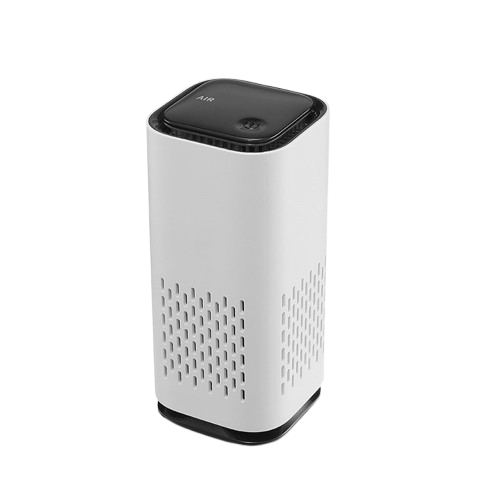
Once ventilation, moisture control, and cleaning are part of your routine, a small USB-powered air purifier can be a convenient addition for the months when windows stay closed most of the time. The PureCabin™ FreshDrive is designed for exactly this kind of everyday use: it plugs into a USB port, power bank, or adapter, runs quietly below 36dB so it will not compete with your heater fan or the radio, and uses negative-ion technology alongside a composite filter to help freshen the enclosed air of a car cabin while you drive.
How FreshDrive fits into a winter cabin routine
FreshDrive is not a replacement for ventilation, cleaning, or your vehicle's cabin air filter — it is designed to work alongside them. Because it is USB powered, there is no separate battery to remember to charge before a cold-weather commute, and the one-touch control means you can start it before pulling out of the driveway without fumbling with settings while your hands are cold. Its compact, cup-holder-friendly ABS body is available in four variants — White, Black, White Pro, and Black Pro — each priced at $24.99 USD with free shipping, so drivers can pick a look that matches their interior.
As with any portable purifier, FreshDrive should not be treated as a cure for illness or as a way to avoid addressing the actual source of moisture, mold, or a persistent leak. If a smell continues after cleaning, drying out the cabin, and replacing an old cabin filter, it is worth having a technician check for a water leak, clogged drain, or HVAC issue that a purifier alone cannot fix.
Recirculation mode vs. fresh air mode in cold weather
Most climate control systems let you choose between recirculation mode, which reuses cabin air, and fresh air mode, which draws in outside air through the vehicle's intake. In winter, drivers often default to recirculation because it warms the cabin faster and keeps outside cold air from diluting the heater's output. That trade-off makes sense for the first few minutes of a cold start, but leaving recirculation on for an entire commute is one of the more common reasons cabin air starts to feel heavy by the end of a long drive.
A practical middle ground is to use recirculation to warm up quickly, then switch to fresh air mode once the cabin has reached a comfortable temperature. Modern HVAC systems are efficient enough that a brief switch rarely causes a noticeable temperature drop, and the improvement in air freshness over a longer drive is usually worth the small adjustment. If your vehicle has an automatic climate mode, check whether it already toggles between the two automatically based on cabin humidity or windshield fogging.
Common myths about winter cabin air
"Cold air can't carry odors or dust"
Temperature does not eliminate airborne particles or odor compounds — it can actually make some smells more noticeable, since cold, denser air moving past your face in short bursts (for example, when a door opens) can carry a concentrated whiff of whatever has been building up inside. The cabin still needs the same attention in winter as any other season, even if the underlying causes shift slightly.
"Running the heater on high will 'burn off' any smell"
Turning the heater up does not clean the air; it simply raises the temperature of whatever air is already circulating. A brief dusty smell on first startup usually fades because loose dust in the ductwork gets dispersed, not because the heat itself is neutralizing anything. If a smell persists well beyond the first minute of driving, heat alone will not resolve it — cleaning, ventilation, and filter maintenance will.
"A purifier means I can skip vacuuming until spring"
A portable purifier addresses airborne particles and can help with general freshness, but it does not remove salt residue, dried mud, or debris that has already settled into carpet and mats. Skipping cleaning for months and relying on a purifier alone typically leads to a cabin that still looks and smells neglected by the time warmer weather arrives.
A simple weekly winter cabin-freshness checklist
- Wipe down wet boots and remove damp floor mats to dry fully.
- Vacuum footwells and seats to remove salt and dust buildup.
- Crack a window or switch out of recirculation for a few minutes on a longer drive.
- Wipe the dashboard, console, and door panels with a material-safe cleaner.
- Check that vents and cabin filter housing are free of visible debris.
- Run your car air purifier with vents clear and the unit placed securely.
- Note any persistent musty smell so you can address the source, not just the symptom.
Frequently asked questions about winter cabin air
Why does my car smell musty only in winter?
This is usually a combination of less ventilation, more moisture from snow and slush, and less frequent cleaning. It is rarely a sign of a serious problem on its own, but persistent musty smells that do not improve after drying out the cabin and cleaning are worth investigating further.
Is it safe to run a car air purifier all winter?
A compact, low-power USB purifier like FreshDrive is designed for continuous, everyday use during drives. Always follow the included user manual, keep the unit's air openings unobstructed, and place it on a stable surface away from pedals and controls.
Should I still use recirculation mode if I have a purifier?
Yes — a purifier is meant to complement your climate settings, not replace them. Use whichever heating and recirculation settings keep you comfortable, and treat ventilation bursts and a purifier as additional layers rather than substitutes for one another.
Winter cabin freshness is mostly about consistency: a little ventilation, regular moisture control, routine cleaning, and a healthy cabin air filter will handle most of the season's challenges. A compact purifier can be a helpful addition to that routine, but it works best paired with good habits rather than on its own. Browse more seasonal guides on our blog, review the FreshDrive FAQ for specific questions about power, noise, and coverage, and check our shipping policy and refund policy before ordering. If you have a question we have not covered, our contact page and about page have more ways to reach the PureCabin Air Solutions team.
This article provides general seasonal cabin-care information. It does not provide medical advice, and a portable air purifier does not replace vehicle maintenance, professional inspection of leaks or mold, or your vehicle's own cabin filtration system.
PureCabin FreshDrive
Fresher cabin air from $24.99
USB-powered · Quiet under 36dB · Free shipping · Secure Stripe checkout