Cabin Air Guide
Quiet Car Air Purifier Under 40dB: Why Noise Matters
Why quiet operation matters for calls, music, and long drives, how decibel ratings actually work, and how to choose a low-noise portable car air purifier.
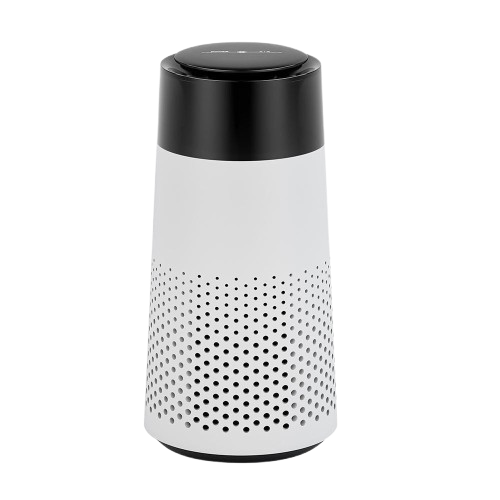
A car cabin is one of the smallest enclosed spaces most people spend real time in every day, which means any added noise is impossible to ignore. A humming fan, a rattling motor, or a purifier that clicks on and off can compete with phone calls, podcasts, navigation prompts, and quiet conversation. If a gadget is too loud to leave running, it usually ends up switched off — which defeats the purpose of owning it in the first place. That is why noise level deserves as much attention as filtration technology when choosing a car air purifier.
This guide explains how decibel ratings work, why "quiet" claims can be misleading, and what to actually look for in a low-noise unit like the PureCabin™ FreshDrive, which is rated below 36dB.
How decibels work, in plain terms
The decibel (dB) scale measures sound pressure level, and it is logarithmic rather than linear. That means a jump from 30dB to 40dB is not a small step — it represents roughly a doubling in perceived loudness. For reference, a quiet library is often cited around 30–40dB, normal conversation sits around 60dB, and city traffic can reach 80dB or more. A device operating below 36dB sits comfortably in that "quiet room" range, meaning it should not noticeably compete with ordinary in-car sound.
Because the scale is logarithmic, a purifier rated at 45dB is not "a little louder" than one rated at 35dB — it can be perceived as roughly twice as loud. This is why a 5–10dB difference between two products matters far more than it might initially appear on a spec sheet.
Why manufacturer dB ratings can vary
Not all decibel claims are measured the same way. Distance from the device, the fan or ion-generation speed setting used during testing, and the testing environment (an anechoic chamber versus a regular room) can all shift the reported number. When comparing products, look for ratings that specify the measurement distance, and treat any unusually low number without context with some skepticism. A rating of "under 36dB" measured at typical desk or cup-holder distance is a more useful data point than a bare number with no context.
Why noise matters more in a car than anywhere else
Voice calls and navigation
Hands-free calls and spoken turn-by-turn directions rely on you being able to hear clearly without raising your voice. A humming purifier near the console can introduce a low, constant background noise that makes it harder for call participants to hear you, especially over a phone's built-in noise-cancellation microphone, which can sometimes amplify steady mechanical hums rather than filter them out.
Music and podcasts
Even at moderate volume, a persistent whirring sound close to your ear can be more distracting than road noise, because it does not vary the way traffic sounds do. A constant tone is often more noticeable — and more fatiguing over a long drive — than variable ambient noise.
Passenger comfort
Rideshare drivers, carpoolers, and parents driving kids to and from activities all share a common concern: a loud gadget can make a vehicle feel less comfortable to passengers who did not choose to bring it along. A device that operates quietly enough to go unnoticed is far more likely to stay switched on for the entire trip.
Long-drive fatigue
On multi-hour drives, small ongoing irritants compound. A purifier that is just loud enough to notice, but not loud enough to immediately turn off, can contribute to low-level fatigue over a long trip, the same way a slightly rattling trim panel does.
What to check before buying a "quiet" air purifier
1. Ask for the actual dB rating and test distance
Look for a specific number, not just marketing language like "whisper quiet." FreshDrive is rated below 36dB, and that figure is listed alongside its other specifications on our FAQ page so you know exactly what to expect before buying.
2. Understand fan speed versus ion generation noise
Some purifiers combine a physical fan with an ion-generation component. Fans are usually the dominant noise source, while negative-ion generation itself is typically silent or nearly silent. A single-speed, low-airflow design — like FreshDrive's roughly 50m³/h air volume in a compact housing — tends to run quieter than multi-speed units pushed to a higher fan setting for stronger airflow claims.
3. Consider mounting and vibration
Noise is not only about the motor — vibration transmitted through a cup holder or hard plastic surface can add a secondary rattling sound. A stable, non-slip base and a rigid housing reduce this secondary noise source, which is why placement and product build quality both affect real-world quietness, not just the spec sheet.
4. Read real user feedback, not just the listing
Marketing copy will almost always describe a product as quiet. Independent reviews and verified buyer feedback are more useful for confirming whether a specific dB claim holds up during actual daily use in a real vehicle.
Where quiet operation matters beyond the car
A genuinely quiet, USB-powered purifier is not limited to vehicle use. The same qualities that make a unit unobtrusive in a car — compact size, low airflow noise, and stable low-power operation — make it just as suitable for a home office desk, a nightstand, or a shared bedroom where a partner or child is sleeping. FreshDrive is designed for enclosed spaces up to roughly 10m² (about 100 square feet), which covers most of these use cases without needing a separate device for each room.
A quick noise-comparison framework
- Under 40dB: comparable to a quiet room; unlikely to be noticed during calls or music.
- 40–50dB: comparable to quiet conversation; may become noticeable over long periods.
- 50–60dB: comparable to normal conversation; likely to compete with in-car audio.
- Above 60dB: comparable to a busy office or louder; not well suited to prolonged use in a small cabin.
FreshDrive's rating of below 36dB places it in the first, quietest tier, which is the primary reason it is designed to stay switched on for full commutes rather than being turned off after a few minutes.
How to test noise yourself before committing to daily use
If you already own a purifier and are unsure whether its noise level is actually a problem, a simple test can clarify things quickly. Place the unit in its normal driving position, start a phone call or podcast at your usual volume, and note whether you have to consciously tune out a hum or whirring sound. If you find yourself noticing the device rather than the audio content, that is a strong signal that its real-world noise level is higher than it appears on paper, regardless of the advertised dB rating.
A second useful test is running the purifier in a silent, parked car with the engine off and windows up — the quietest environment you are likely to experience. If the unit is clearly audible under those conditions, it will almost certainly be noticeable during normal driving as well, since road noise and cabin sound rarely mask a persistent mechanical hum as effectively as people assume.
Common misconceptions about "quiet" air purifiers
"Lower price means it must be louder"
Noise level is primarily a function of fan design, motor quality, and housing rigidity, not simply price. Some expensive purifiers with powerful fans for large-room coverage are actually louder than smaller, more affordable units designed specifically for compact spaces like a car cabin or a desk.
"If it's quiet, it must not be doing anything"
This assumption confuses fan noise with the presence or absence of purification technology. Negative-ion generation, in particular, does not require a powerful fan to function, which is why a unit can operate quietly while still actively running its core technology.
"All decibel ratings are measured the same way"
As covered earlier, measurement distance and conditions vary between manufacturers. Two products both advertised as "30dB" are not necessarily equally quiet in practice if they were tested under different conditions, which is another reason hands-on testing or verified reviews matter more than the number alone.
Balancing noise with other priorities
Noise should not be the only factor in your decision, even though it is an important one. A purifier that is completely silent but falls apart after a few months, or one that requires an inconvenient proprietary charger, is not a good long-term choice just because it is quiet. Look for a balance: a documented, realistic dB rating, a durable housing, straightforward USB power, and a manufacturer that provides clear specifications rather than vague marketing claims. Weighing noise alongside build quality, warranty or return terms, and genuine user feedback gives a more complete picture than focusing on any single spec in isolation.
Other features worth checking alongside noise
A quiet purifier is only useful if it is also practical. FreshDrive pairs its low-noise operation with USB power (no separate battery to charge), one-touch control, a composite filter, and negative-ion technology, all inside a compact ABS housing available in four variants — White, Black, White Pro, and Black Pro — for $24.99 USD with free shipping. Details on delivery timelines are available on our shipping policy page, and our refund policy outlines returns if a unit does not meet your expectations.
How noise perception changes with fatigue and time of day
Human hearing does not perceive sound the same way at every hour or energy level. A faint hum that goes unnoticed during an alert morning commute can feel far more grating during a tired evening drive home, simply because attention and tolerance for background noise both shift with fatigue. This is one reason a product's real-world "quiet enough" threshold can feel inconsistent to the same driver on different days, even though the device itself has not changed at all. Choosing a unit with a genuinely low, well-documented decibel rating gives you more margin on the days when your tolerance for background noise is lower than usual.
Early-morning and late-night drivers, including many rideshare and delivery drivers working irregular shifts, are especially likely to notice small noise sources that daytime drivers might tune out entirely. If your schedule includes these hours, prioritizing a purifier rated well under 40dB — rather than one that is merely "quieter than average" — is a reasonable way to reduce one more small source of fatigue during demanding shifts.
How cabin acoustics affect what you actually hear
A car cabin is a small, mostly hard-surfaced space, and sound behaves differently inside it than in an open room. Hard dashboard plastic, glass, and leather or vinyl seating can reflect sound rather than absorb it, meaning a hum from a purifier placed in a central cup holder can be audible from multiple seating positions simultaneously. Cloth upholstery and carpeted floors absorb more sound than hard trim, so cabins with more soft material may experience slightly less noticeable purifier noise than cabins with mostly hard, reflective surfaces.
Placement relative to your ears also matters more than raw distance might suggest, since sound intensity drops off quickly over short distances in a small cabin. Moving a purifier just a few inches farther from the driver's seat, for example, to a rear cup holder instead of the front console, can noticeably reduce how prominent its sound feels, even though the unit itself has not changed its actual output.
Frequently asked questions
Is 36dB actually quiet?
Yes — 36dB is roughly comparable to a quiet room or a library, well below normal conversation levels, which is why it should not noticeably interfere with calls, music, or navigation audio.
Does a quieter purifier mean weaker performance?
Not necessarily. Noise level is primarily driven by fan speed and housing design, not solely by the underlying purification technology. A well-engineered compact unit can maintain low noise while still supporting its intended airflow and ion-generation specifications.
Where can I check FreshDrive's full specifications?
Visit our FAQ page for full specifications, or contact us directly with any specific questions before you buy.
This article provides general product and comparison information. Decibel ratings can vary by measurement method and are provided for general guidance only. Explore more cabin-care guides on our blog, or return to the FreshDrive homepage to see current pricing and variants.
PureCabin FreshDrive
Fresher cabin air from $24.99
USB-powered · Quiet under 36dB · Free shipping · Secure Stripe checkout